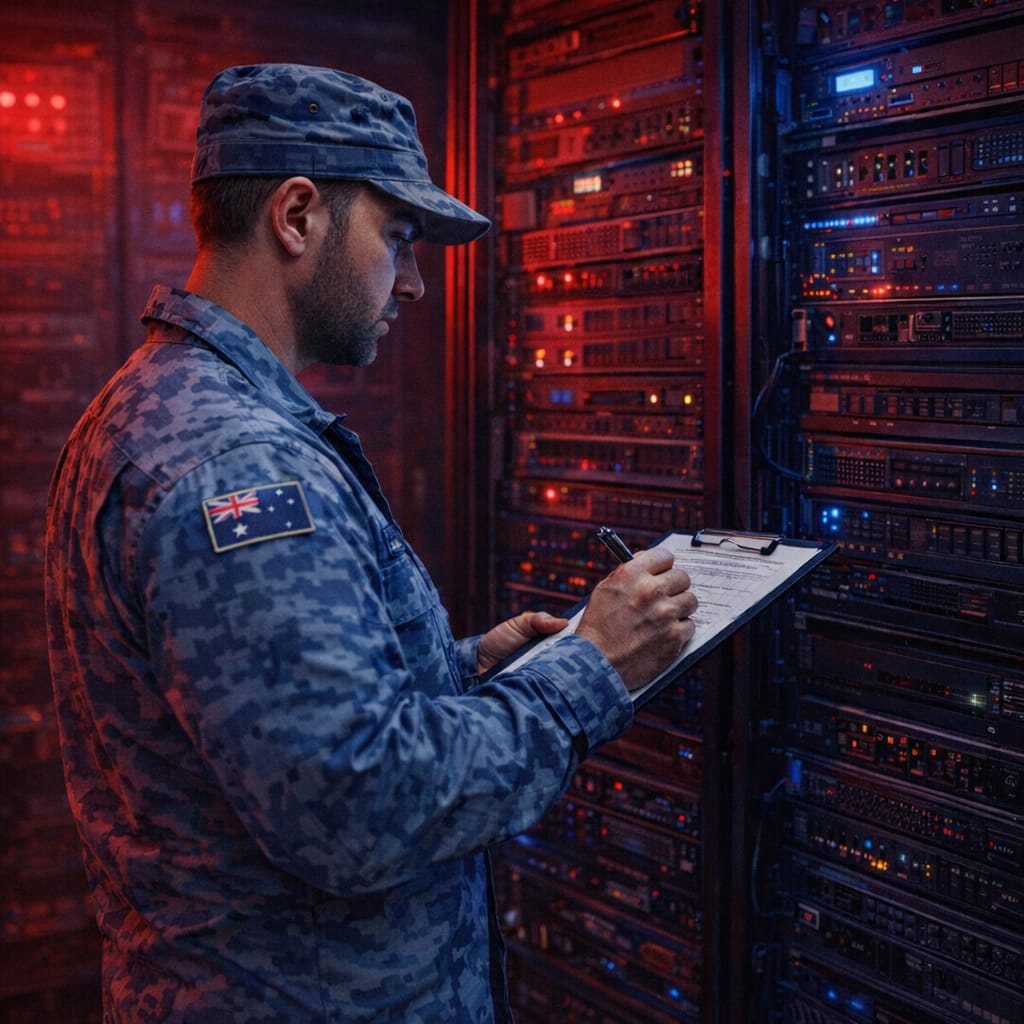
Most organisations have an Incident Response Plan (IRP), Disaster Recovery (DR) runbooks, and Business Continuity Plans (BCP). The real question is whether those documents work under real pressure, when detection is incomplete, evidence is messy, decision-makers are busy, and technical teams are operating with imperfect information. CyberOps Pty Ltd runs incident response simulated exercises inside a cyber range so teams can rehearse realistic incidents end-to-end, validate their actual operating model, and identify what needs to change before a real incident tests it for them.
Incident Response Exercises, Delivered by CyberOps
CyberOps Pty Ltd designs cyber range exercises to be more than a talk-through. These simulations recreate the tempo of an incident: timed injects, ambiguous indicators, competing priorities, and evolving attacker behaviour. Participants are expected to respond using the same tooling, escalation paths, and decision rights they would rely on in production.
Unlike common tabletop exercises, CyberOps Pty Ltd embeds your own policies and procedures into the scenario. That means your IRP, BCP, DR playbooks, communication templates, RACI, severity definitions, notification thresholds, evidence handling steps, and recovery objectives are all exercised as written. The exercise therefore tests not only participants, but also the practicality of the organisation's current documentation.
Put Your Policies Under Realistic Pressure
A well-written plan can still fail if it is hard to execute, unclear on ownership, or unrealistic about time and capability. CyberOps Pty Ltd uses the simulation to surface policy-to-practice gaps such as:
- Unclear escalation triggers and severity criteria
- Missing decision points, including who can isolate systems, who can authorise downtime, and who approves communications
- Dependency blind spots across identity platforms, backups, SaaS tenancy access, and third parties
- DR steps that assume data, access, or tooling that will not exist during an incident
- Recovery sequencing that does not match operational priorities
This approach turns the exercise into a validation mechanism for governance, not just a training event.
Technical Response, Not Just Discussion
CyberOps Pty Ltd can run exercises that require practical technical actions, triage, containment decisions, evidence preservation, and recovery coordination, aligned to your environment and team roles. The scenario can be tailored for different functions, including IT, SOC, service desk, executives, communications, legal, risk, and OT/engineering, so each group practices the decisions they actually own.
Evidence-Based Reporting and Improvement Roadmap
Following the exercise, CyberOps Pty Ltd produces a structured report documenting what happened, what decisions were made, and where plans and procedures either supported or hindered response. The output focuses on actionable uplift across two fronts:
- Documentation improvements (IRP/BCP/DR clarity, ownership, triggers, checklists, communications, and governance)
- Practical technical improvements (tooling readiness, logging/visibility, access pathways, backup recovery workflow, containment options, and repeatable runbooks)
The result is a realistic, prioritised improvement plan that strengthens incident readiness without waiting for a real incident to provide the lesson.